Wannabe
Scaling an EdTech ecosystem through product design
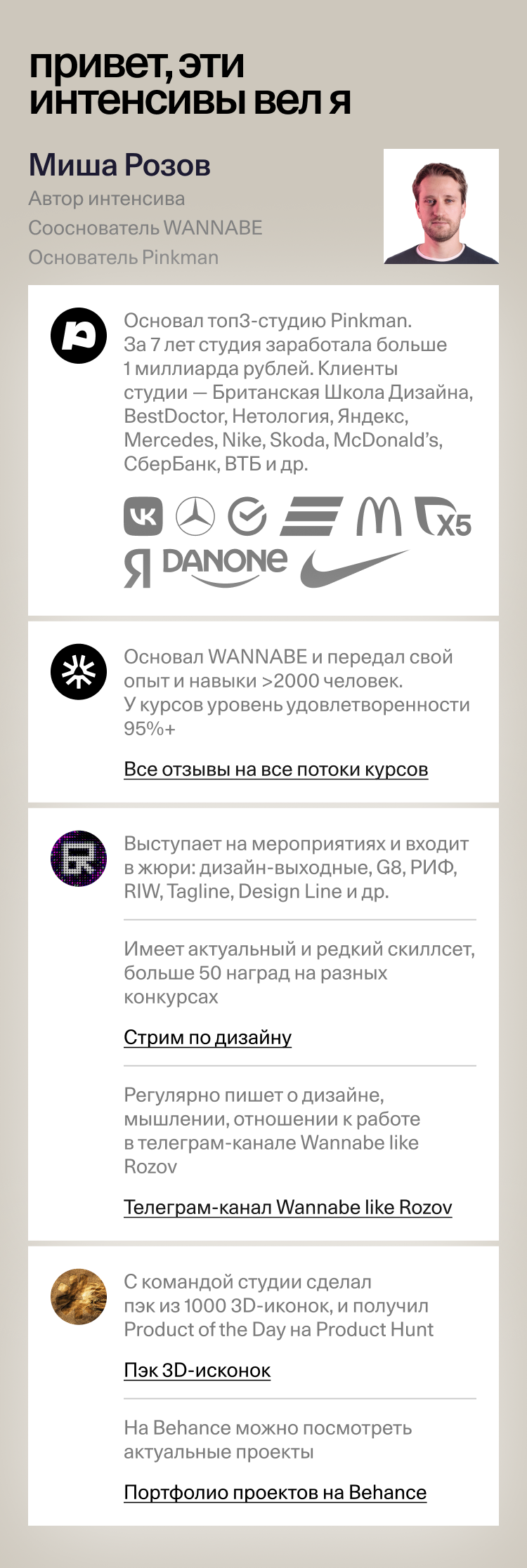
Designed five bespoke product experiences, restructured information architecture, and helped accelerate brief-to-production delivery from 5–7 to 2–3 days, supporting rapid launches and portfolio growth.
Overview
Platform
Responsive web · B2C / B2B · EdTech
Product
Expert-led education in UX/UI, product design, AI, and motion.
My role
Product Designer · UX/UI, Information Architecture, Art Direction, Design Systems & Developer Handoff
Timeline
June – October 2026 · Part-time
Impact at a Glance
- Brief-to-production turnaround in days
- 5–7 → 2–3
- Course-content support inquiries
- −15%
- Products supported
by scalable navigation - 5–6 → 10+
01 / Context & Challenge
Designing for growth, brand recognition, and fast launches
Wannabe is an EdTech company offering practice-oriented programmes led by experienced industry professionals. The ecosystem it shared with Roots Business School reached 85,000 users, the number of graduates exceeded 3,000, and the product lineup grew from 5–6 to 10+ products.
Each product needed its own visual identity to reflect its subject and audience. Interfaces were designed from scratch, while a shared typeface kept the brand recognisable.
The challenge
The critical constraint was time-to-market: product pages often had to move from brief to production within 2–3 days.
My challenge was to balance three competing priorities: bespoke visual direction, scalable UX architecture, and rapid delivery, without sacrificing product clarity or visual quality.
From student to product designer
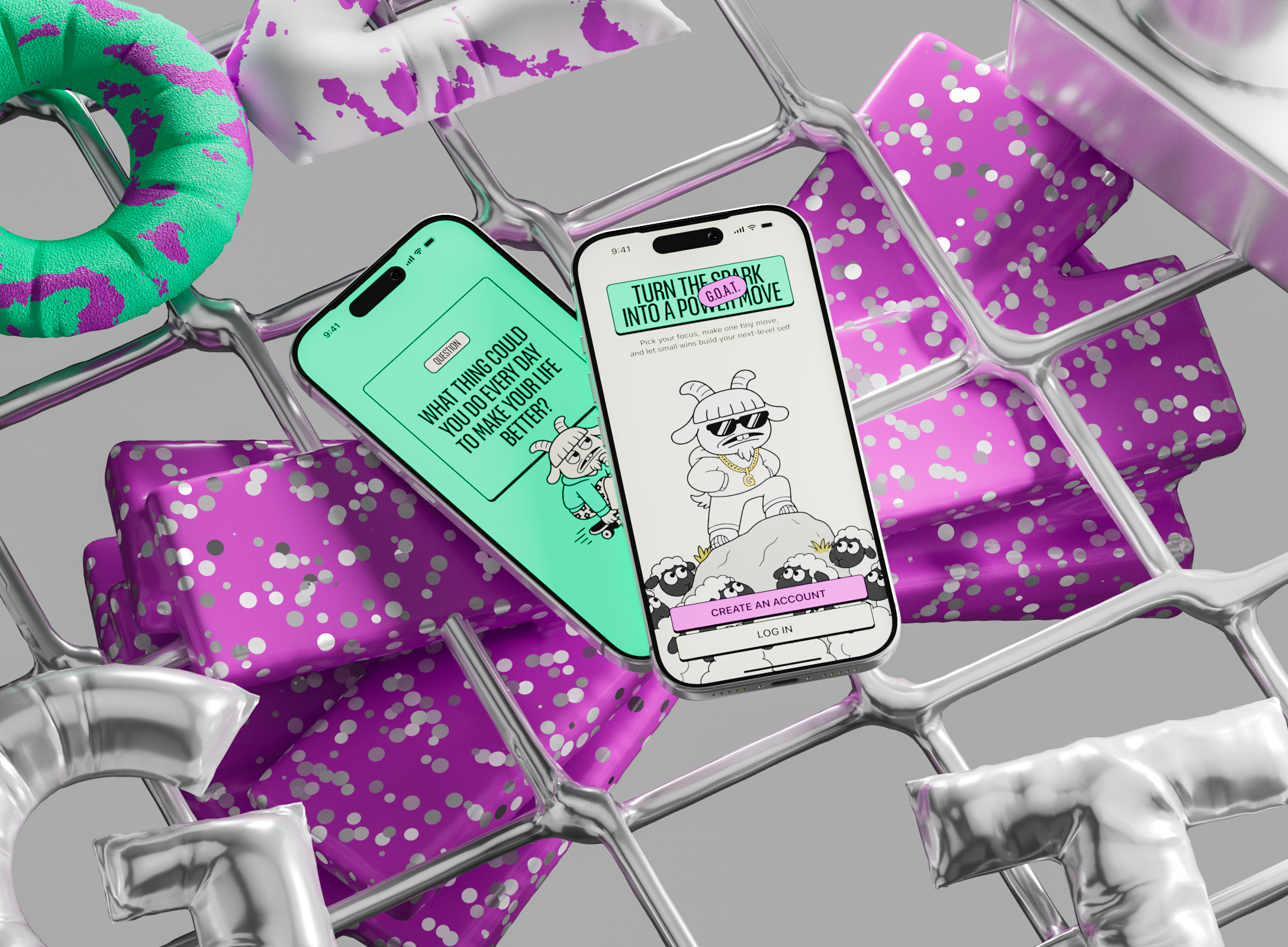
After completing three Wannabe programs, my G.O.A.T. project was selected as a graduate showcase and featured on two commercial landing pages. I was subsequently invited to join the product team.
View case02 / My Role & Approach
Independent design ownership. Collaborative product decisions.
- UX/UI Design: designing five product pages, visual concepts, and responsive layouts, and supporting existing products.
- Product Design: developing information architecture and user journeys together with the product manager.
- Delivery & Design QA: handing designs over to developers and reviewing the implementation in production.
- Collaboration: adapting existing concepts and taking part in final reviews with a senior designer.
Result: reduced time-to-market from 5–7 to 2–3 days through rapid iteration and a focus on key decisions.
03 / Solution 01: Scalable Navigation
From a course catalogue to a product ecosystem
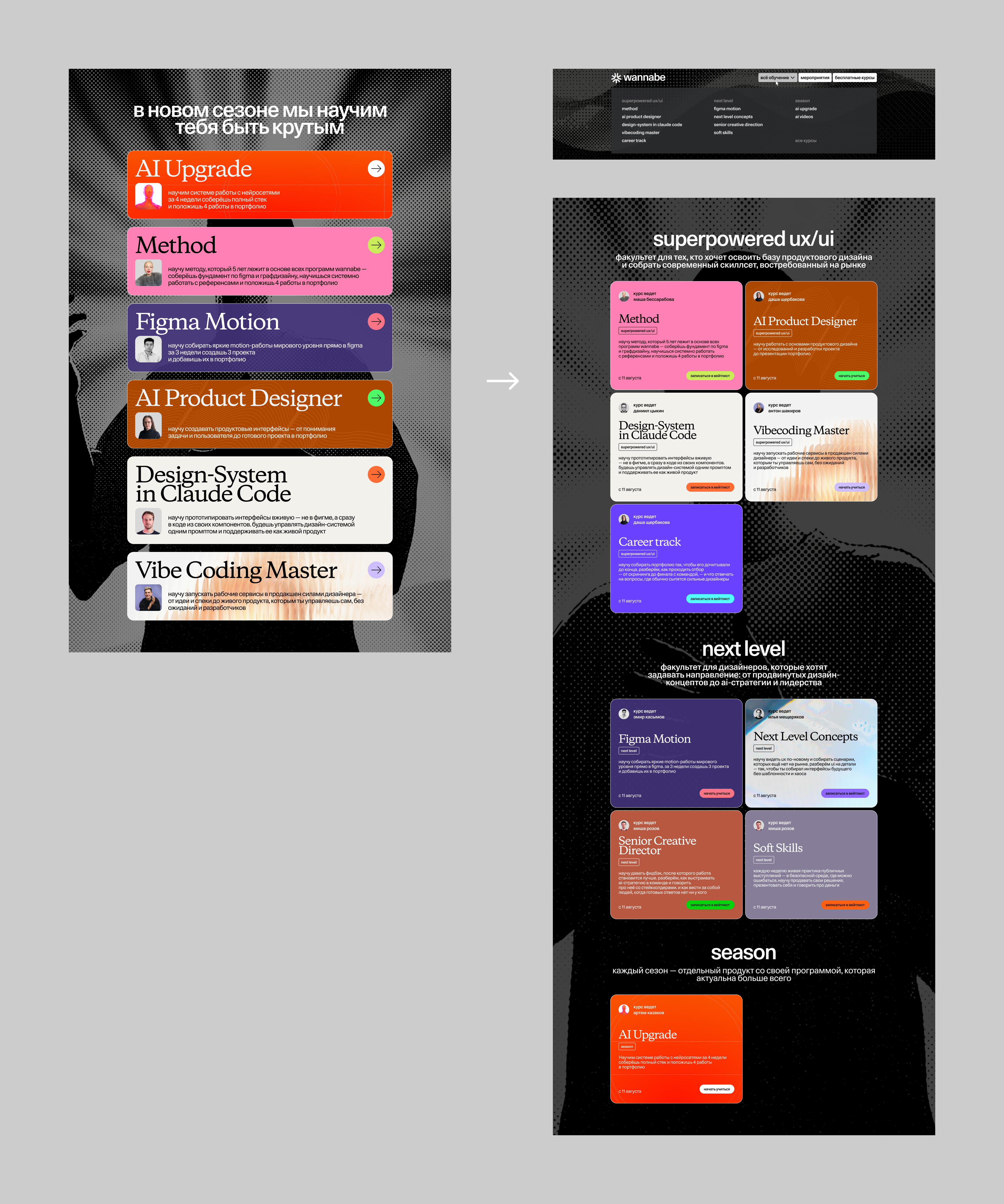
As Wannabe's portfolio doubled, its existing navigation became increasingly difficult to scale, creating challenges for product discovery and future launches.
Working with the product manager, I restructured the information architecture around two faculties and seasonal products, aligning the navigation with the homepage.
Rather than optimising for the current catalogue alone, we designed an extensible structure capable of accommodating new offerings without recurring architectural changes.
04 / Solution 02: Individual Product Pages
One brand. Multiple product identities.
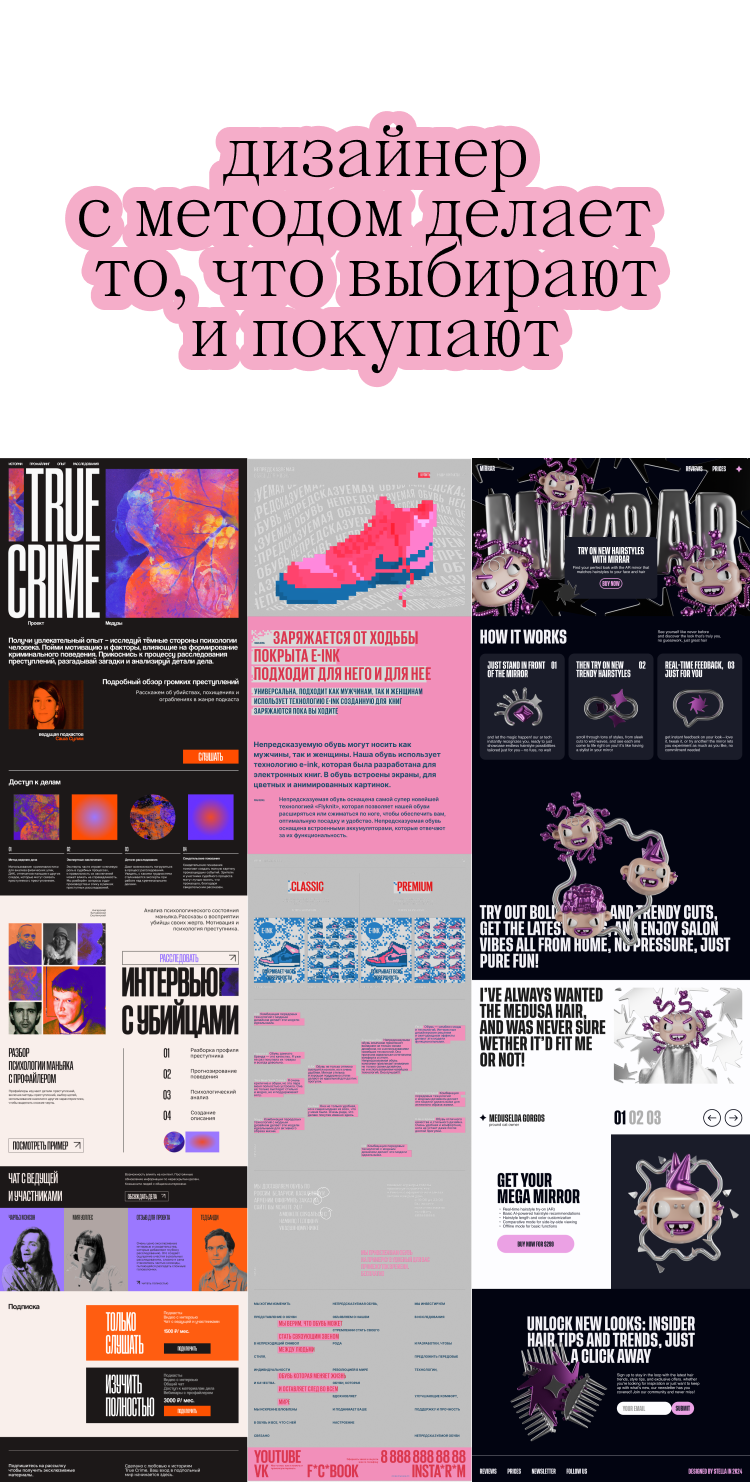
Each course had its own audience, value proposition, and expert-led positioning. A universal landing-page template would have limited product differentiation and creative flexibility.
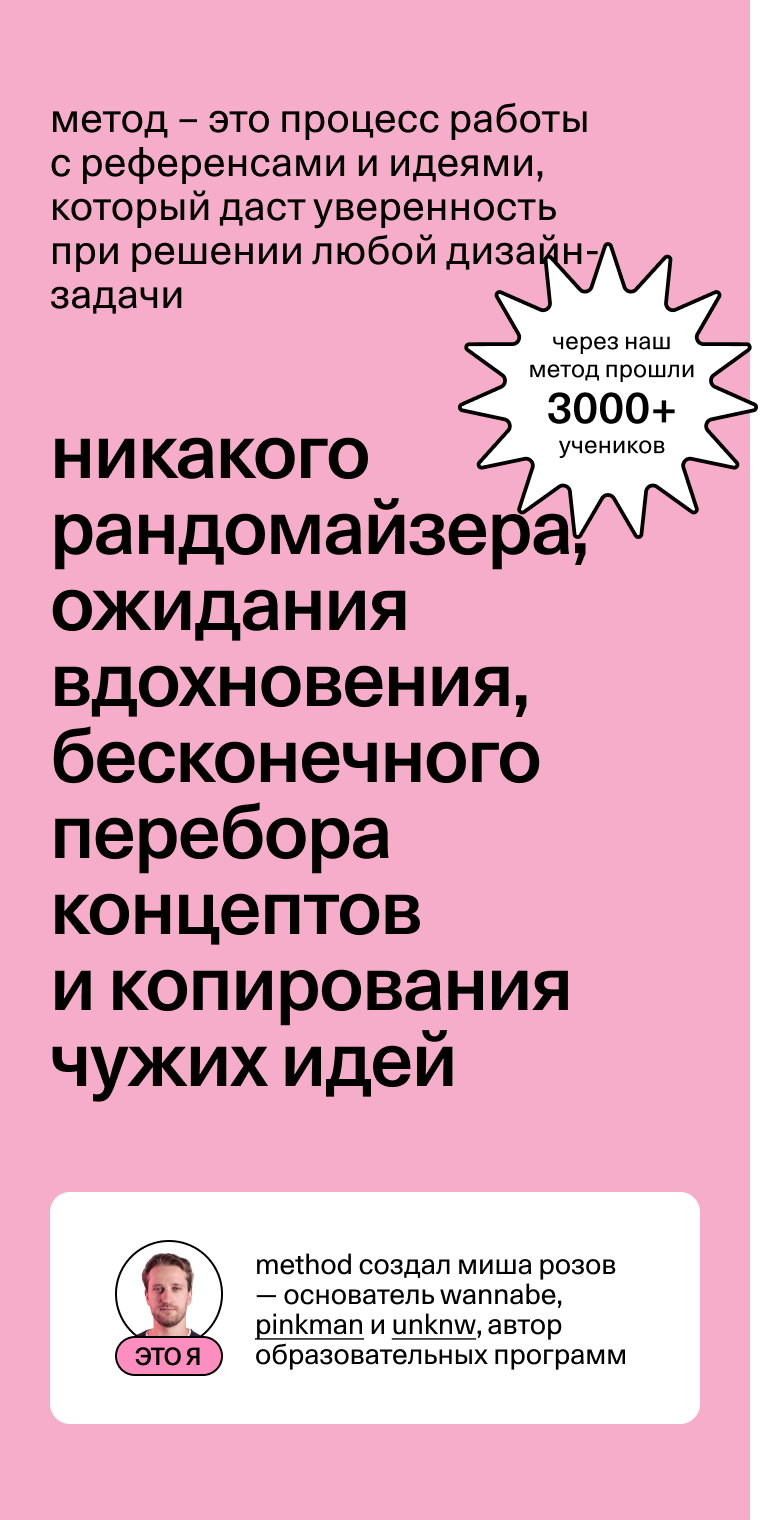
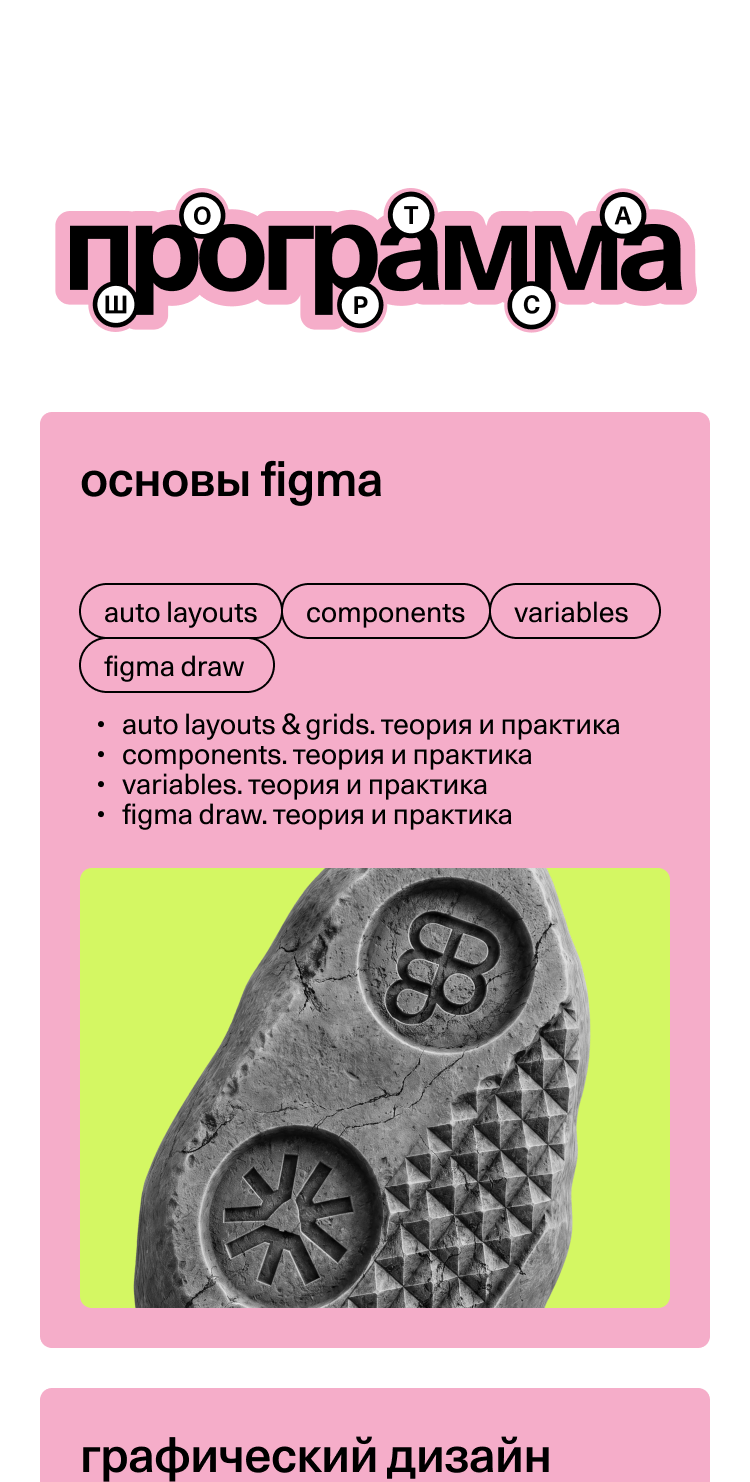
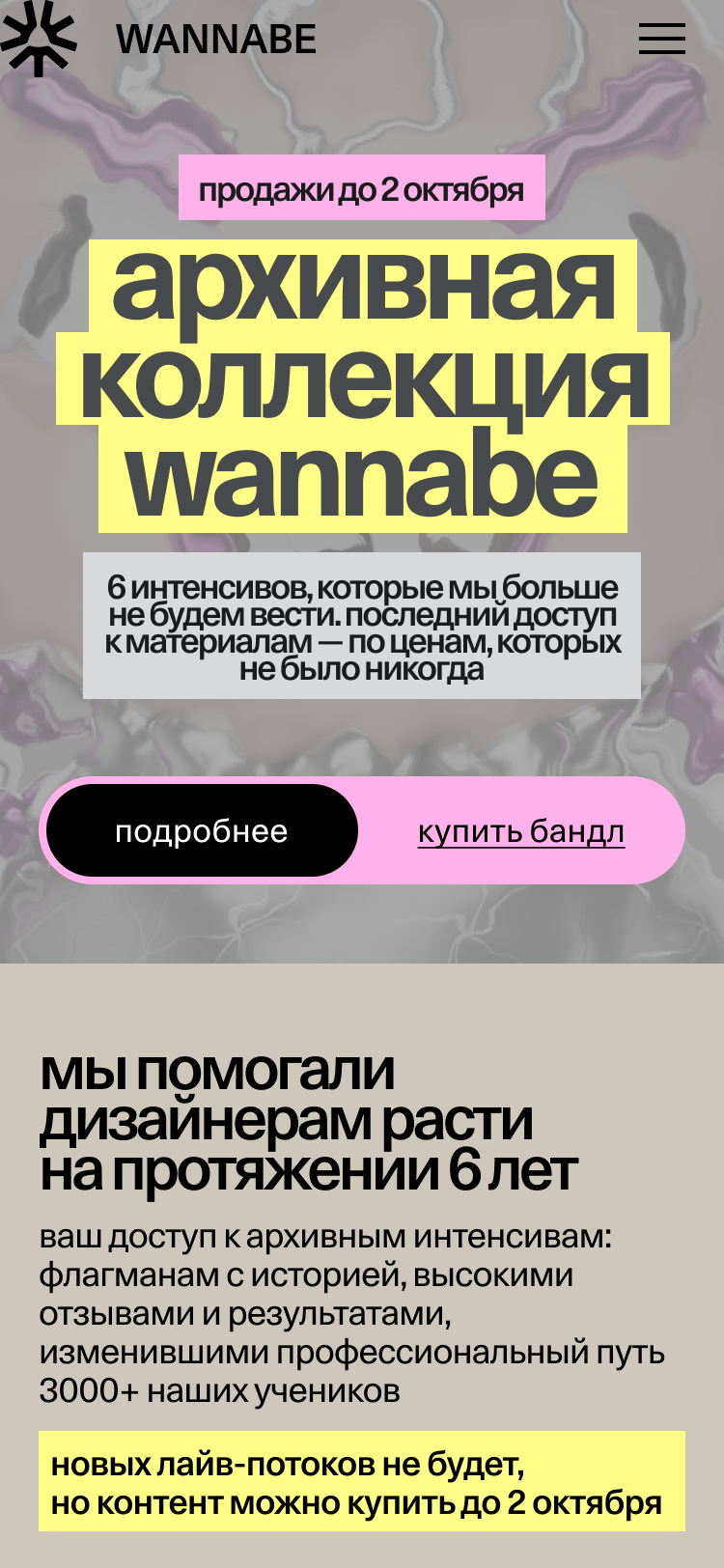
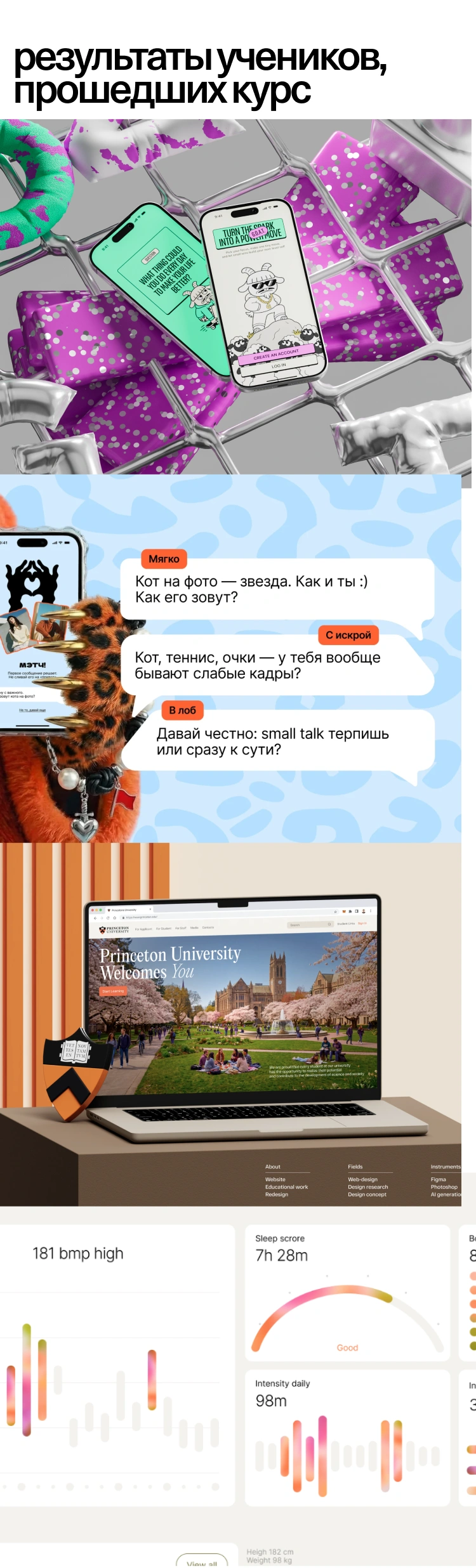
I developed bespoke visual concepts, UI, and information hierarchy for five products. Wannabe’s brand typography remained a mandatory element throughout. This preserved brand recognition while giving each product its own visual character.




05 / Solution 03: Designing for B2B
One brand. A different decision-maker.
Wannabe's expansion into corporate education introduced a different customer journey: from individual course purchases to team training, business value, and lead generation.
Working with the product manager, I designed the company's first dedicated B2B landing page, adapting the information architecture to organisational needs.
The experience prioritised business challenges, training formats, credibility, and a clear path to consultation, translating an existing educational offering into a new commercial proposition.
06 / Outcomes & Impact
Faster launches. Clearer experiences. Scalable foundations.
5–7 → 2–3 days
Reduced brief-to-production turnaround through efficient design execution, close cross-functional collaboration, and streamlined handoff.
−15% support inquiries
Course-content-related inquiries decreased following improvements to product information clarity and hierarchy.
5–6 → 10+ products
Restructured navigation to support portfolio expansion, accommodating six subsequent lineup changes without redesign.
5 bespoke product experiences
In under two months, I designed five major product pages, each with its own visual direction and positioning, including an archive of courses created before the project was put on hold.
Beyond individual launches, reusable UI solutions were integrated into the shared design system, extending their value across the wider ecosystem.
07 / What I Learned
Creative differentiation at production speed
Wannabe strengthened my ability to connect product strategy, visual craft, and technical execution within demanding release cycles.
Working across diverse audiences and product propositions taught me to distinguish what should remain consistent at the system level from what deserves a bespoke creative solution.
My biggest takeaway: scalability doesn't require uniformity. It requires building flexible systems that support distinctive products, efficient execution, and sustainable business growth.
View another case