G.O.A.T.
Took an original idea through end-to-end product design, from discovery and UX to a working prototype built with AI and code
Self-initiated educational project
Explore the live prototype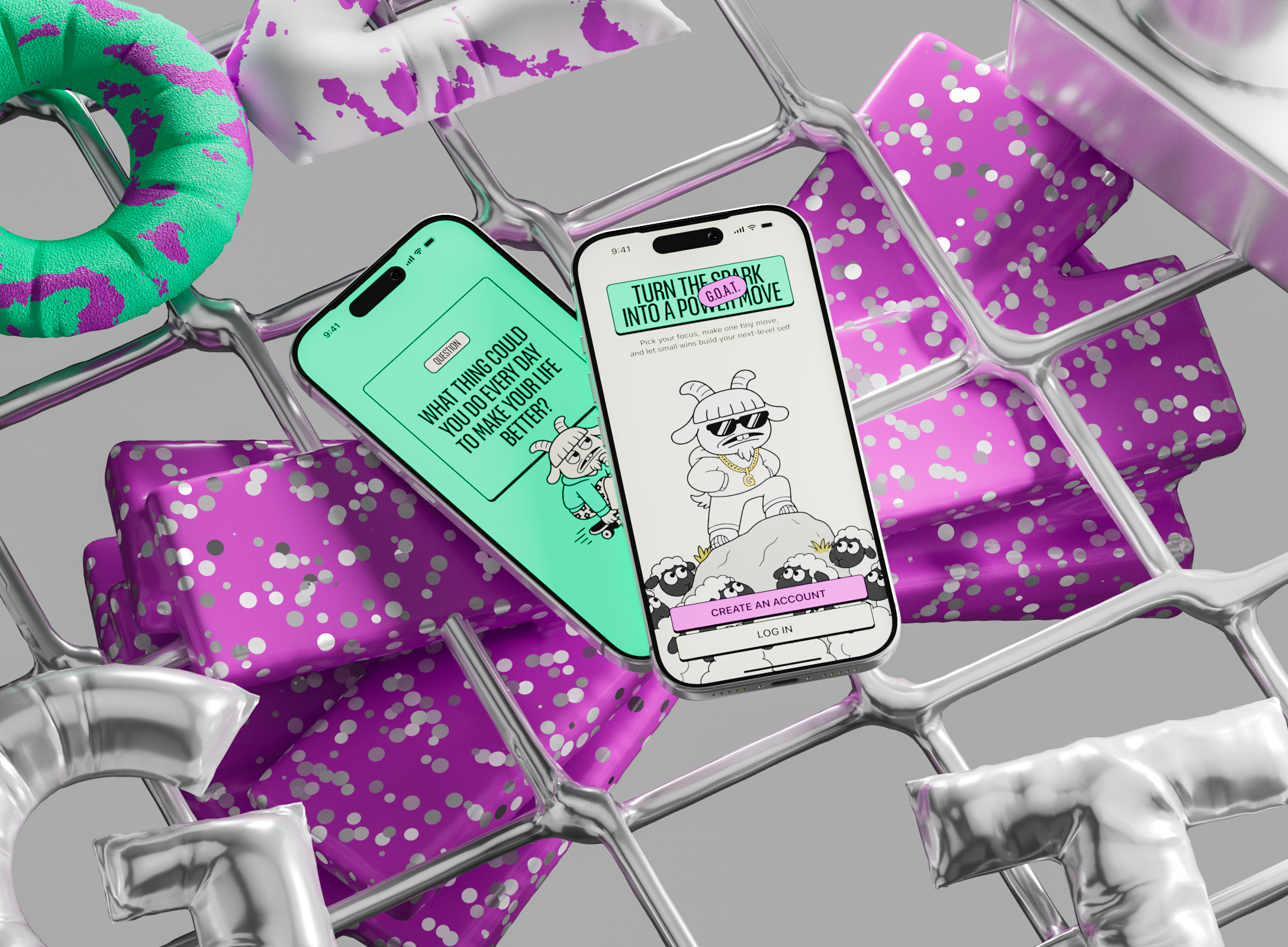
01 / Introduction
Challenge
Inspiration fades quickly unless it turns into action. G.O.A.T. helps users choose a quality to develop, define manageable first steps, and track their progress. Knowing where to start is already a step towards success.
Personal motivation
I am always learning and exploring new interests, but I know from experience that inspiration does not always lead to action. That experience became the starting point for G.O.A.T.
Design approach
I enjoy finding connections across disciplines and turning knowledge into product decisions. The philosophy of kaizen inspired the concept behind G.O.A.T.: personal growth through actions so small they are hard to put off.
My role
I independently took the project through the full design cycle, from research and product strategy to UX/UI design and an interactive prototype built using Design Engineering. Along the way, I refined the design based on feedback from experienced lead designers at major tech companies.
Featured in WANNABE's marketing
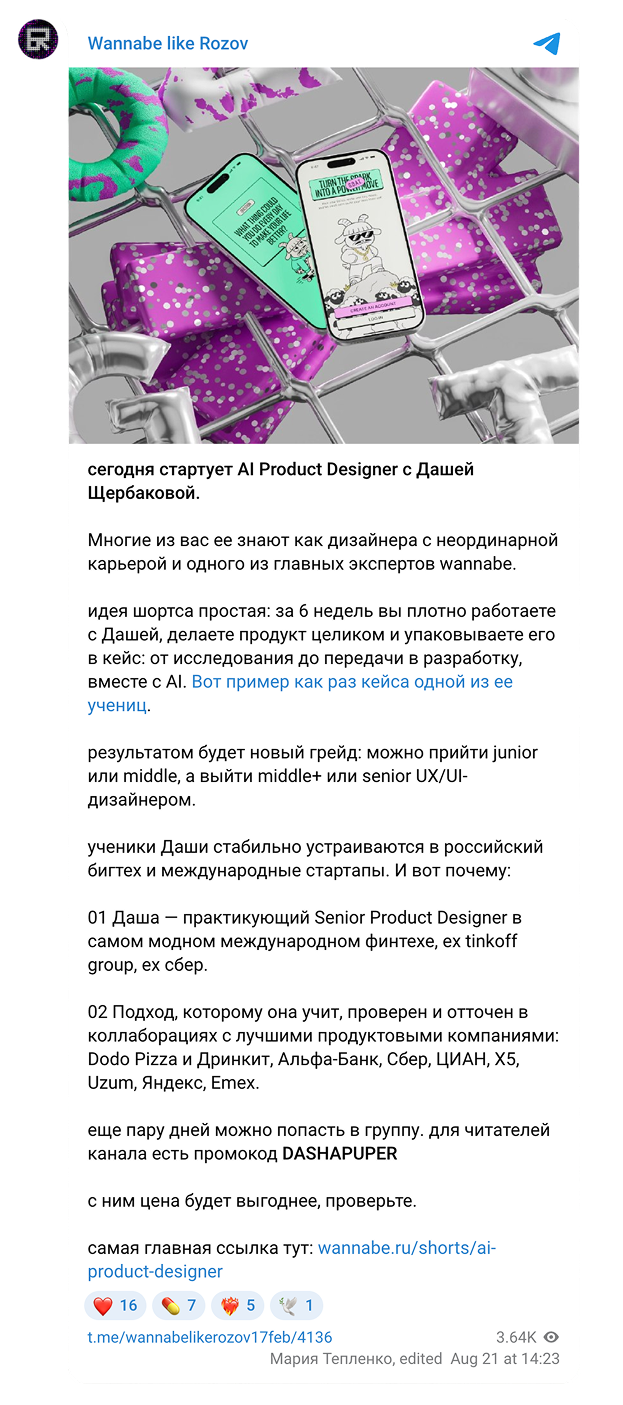
G.O.A.T. was selected as a graduate showcase project and featured in WANNABE's marketing, including two commercial landing pages and a promotional Telegram post. Following the project's selection as a graduate showcase, I was invited to join WANNABE's product team.
Research & Framing
02 / The intention–action gap
Audience & approach
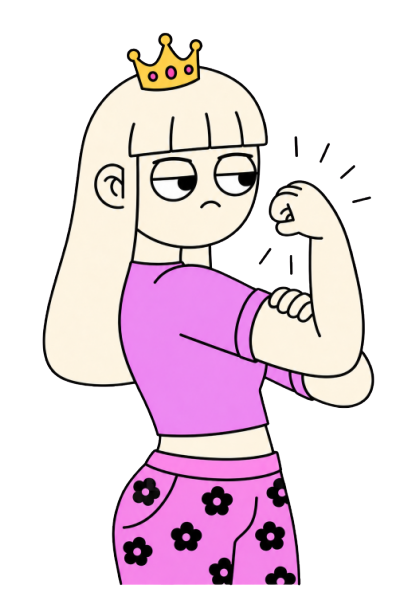
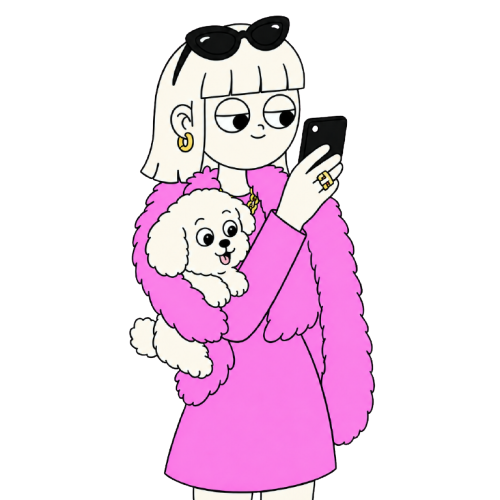
I focused on people aged 18–32 beginning their self-development journey, framing four possible motivation triggers as exploratory hypotheses: inspiring content, recurring problems, self-reflection, and comparison with an ideal self.





#triggered
#future-self

#inspired_user
#comparison
#wanna_thank_me
Problem-Triggered
Comparison-driven
Inspired by content
Future-self seeking
Building on JTBD, I used AI-assisted role-based simulations to explore potential user scenarios. By assigning different personas, motivations, and contexts, I examined possible functional, emotional, and social needs.
This approach helped me formulate hypotheses about the barriers between intention and action and identify design opportunities. The findings were treated as exploratory hypotheses rather than validated user insights.
Exploratory hypotheses & design decisions
This exploration suggested three potential barriers: decision overload before starting, the disconnect between completed tasks and meaningful progress, and the difficulty of continuing once motivation fades.
These hypotheses shaped the product's core experience: a personalised focus plan, manageable daily actions, and feedback connecting each small step to a quality users want to develop.
Flow 1
03 / From inspiration to action
Motivation often fades before users can turn the desire to change into concrete action.
Users choose a quality they want to develop and answer a few questions about their motivation patterns. Based on their responses, G.O.A.T. creates a personalized three-stage Focus Plan with a clear first step, helping users move from vague intentions to meaningful action.
Click any screen to view details.
Flow 2
04 / Building a habit that fits
Vague goals and unrealistic expectations make it difficult for users to get started and stay consistent.
Users choose their effort level, a habit to develop, and how much time they can commit each day. They then define a specific action and set reminders. G.O.A.T. turns these choices into a simple three-stage plan, making personal growth feel manageable and easier to integrate into daily life.
Click any screen to view details.
Flow 3
05 / Small actions, real progress
When users feel overwhelmed or unsure where to start, even a small action can help overcome the initial resistance.
Users choose a simple activity, complete it using a built-in timer, and receive immediate feedback on their progress. G.O.A.T. celebrates the achievement with a visual reward and a streak counter, reinforcing the idea that meaningful change can begin with just a few minutes of action.
Click any screen to view details.
06 / Visual direction
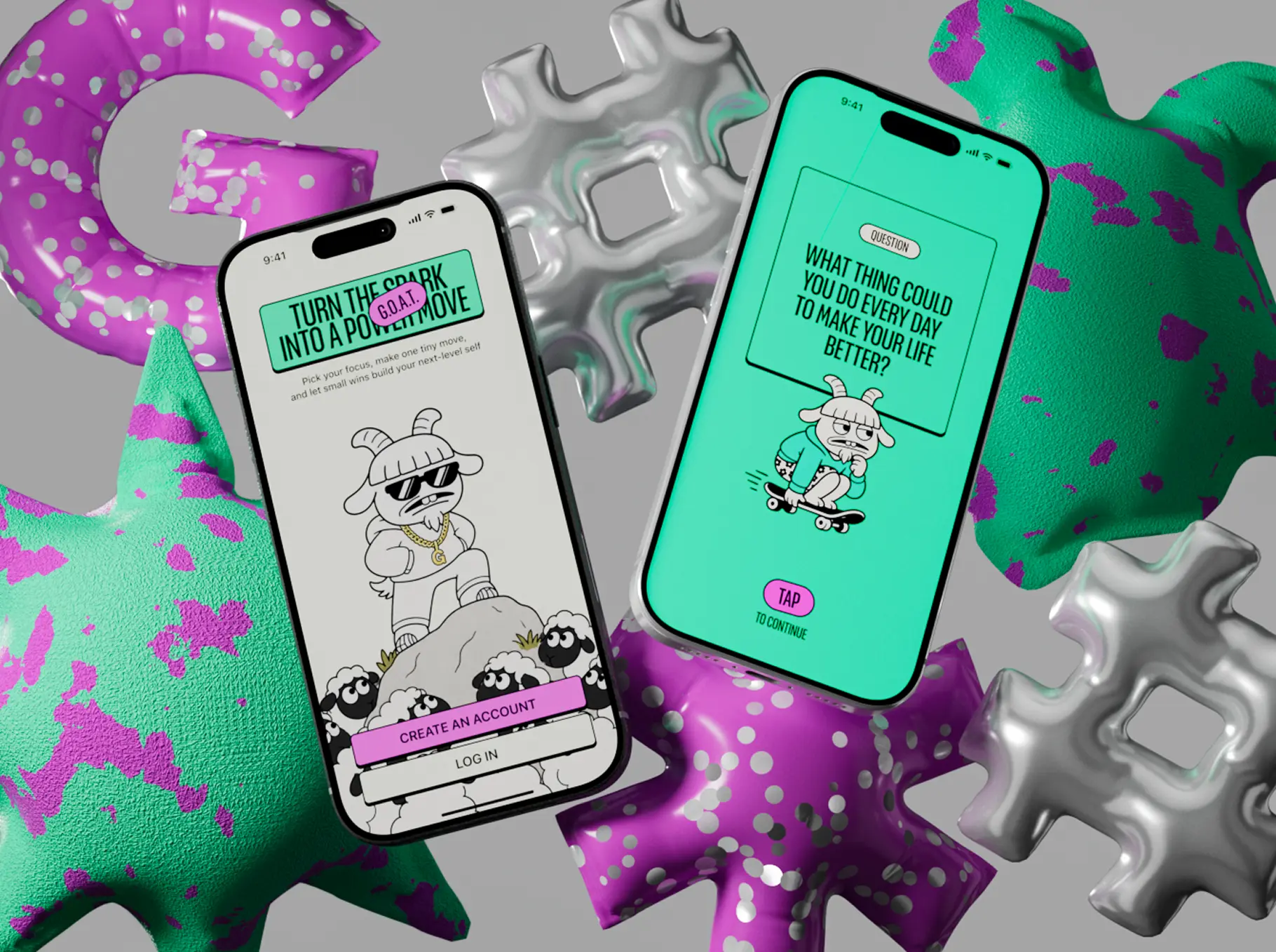
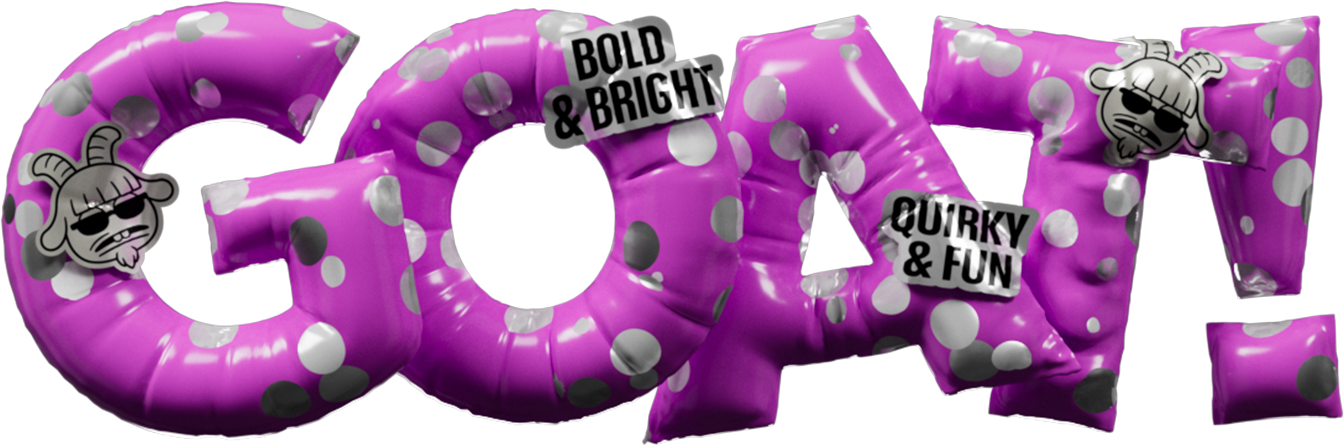
I wanted G.O.A.T. to feel as bold as the idea behind it: stop waiting for the perfect moment and start taking action.
The visual direction draws on neo-brutalism, with punchy colours, expressive typography, strong outlines, and playful graphics. Underneath the bold aesthetic, the interface stays simple and intuitive, keeping the focus on action.
07 / Character design
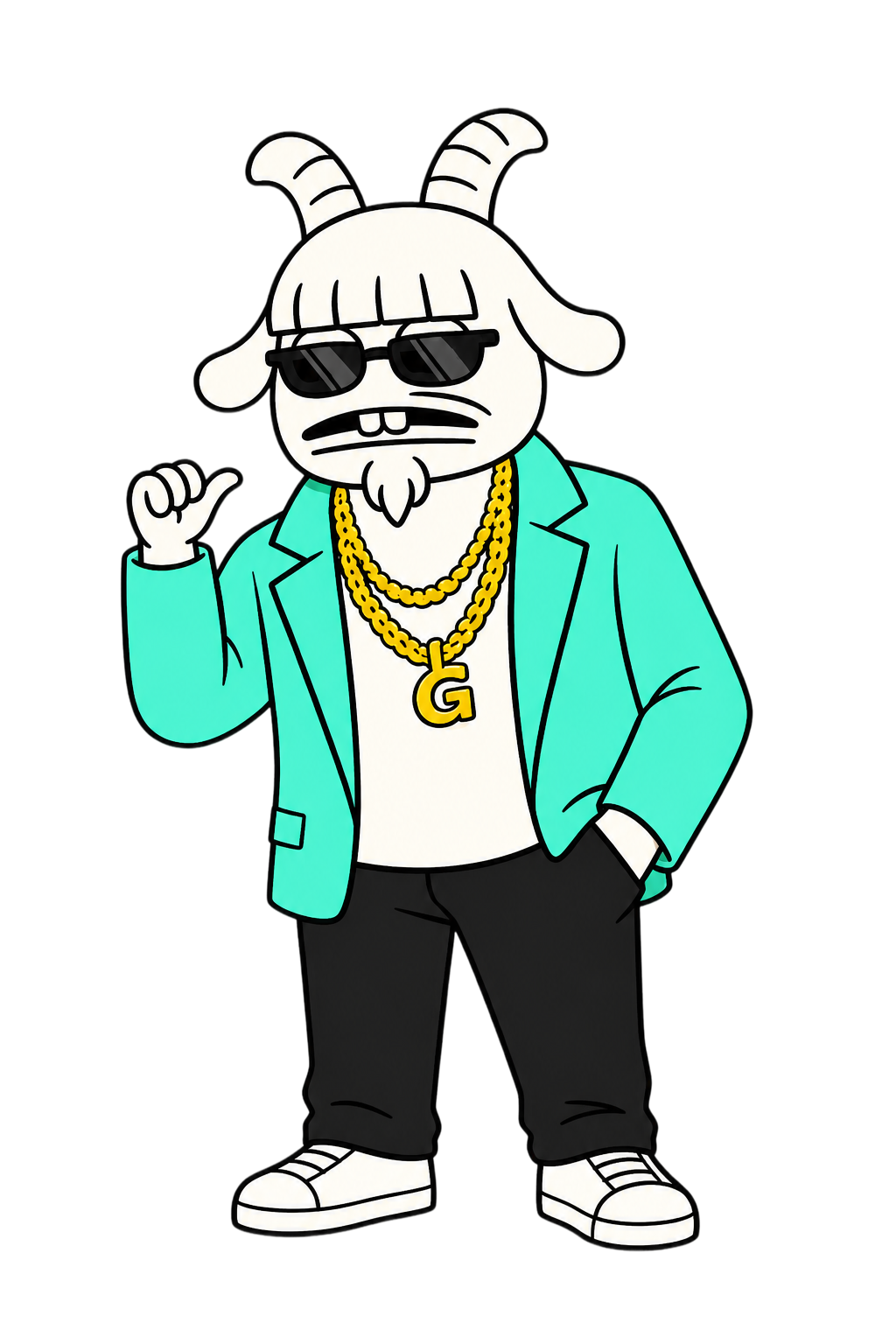
Meet GOAT. A goat with main character energy, quiet confidence, and a touch of attitude.
Self-development apps often feature distinctly cute, friendly characters that support and motivate users. I wanted to move away from that image and create a mascot with a stronger personality.
Inspired by hip-hop, celebrity culture, and internet memes, I created a kind of rock star among mascots: confident, laid-back, and a little rebellious.
I used Cinema 4D, Redshift, and procedural materials to create the character and supporting visuals.
GOAT does not lecture or try to be the perfect friend. She embodies self-confidence, irony, and the freedom to be yourself.
08 / Design engineering
I used AI-assisted design engineering to turn G.O.A.T. into a working prototype with three interactive flows, testing real interactions, transitions, and pacing beyond Figma. This brought product thinking, visual design, and code into one workflow.
Explore the live prototypeReflection
09 / Things I learned
G.O.A.T. helped me combine behavioural principles, product thinking, and design engineering to turn an abstract idea into an interactive user experience.

View another case